top of page


Blog
Five Habits That Lift Engagement
Over the last eight years, I’ve worked with a range of organisations and leaders, some for a considerable period of time. I’ve seen their employee engagement scores improve. I’ve also seen them deliver greater value to the business. So what have these leaders done? There are five things that consistently stand out. 1. Communicate Regularly Great leaders communicate consistently. They establish a rhythm, often on a particular day and time each week. It might be a video, an
5 days ago2 min read
What Makes a Great Executive
Over the last two years, I’ve had the opportunity to work closely with some long-term clients and their executive teams. So what makes a great executive? They Work On The Business Mature executives understand the difference between working in the business and working on the business. They don’t disappear when there's a significant issue or crisis. They step in, support their team and help resolve what matters. But they also know when to step back. They build a team that ca
Sep 102 min read

The Power of Humble Leadership
Over the past 12 months, I've noticed a leadership style emerging across many of the organisations I work with. It doesn't fit the traditional image of the highly visible leader who dominates conversations, has all the answers, or feels the need to direct every decision. Instead, it's a leadership model built on humility, clarity, trust, and consistency. I call it the “Humble and Clear Leader.” These leaders are creating high-performing teams without becoming the centre o
Sep 42 min read
From Tech Expert To Business Leader
Most people know me as a former CIO and digital leader. Today, I'm more of a business leader. I increasingly find myself advising senior executives and leaders of large organisations. Looking back, I’ve been thinking about what changed. It wasn’t one big moment, I moved slowly from tech expert to business leader. It was a series of small shifts in how I looked at business, leadership, and the conversations I was having. Change Where You Have Your Coffee The first shift was
Aug 292 min read
When Leadership Needs More Than Information
The role of leadership is changing. I've seen this more and more in recent months, and it has reinforced something I've been saying for some time... the value is no longer simply in having access to more leadership information. It's in knowing what to do with it. AI has changed some of my services, and I am now seeing four areas where executives and leadership teams are seeking more support. Organisations have access to an enormous amount of AI-generated output. Research,
Aug 202 min read
Doing the Difficult Things
There's always something new competing for attention in technology. A shiny new platform. A new AI capability. A new tool promising to transform the organisation. Those working in IT know the wrestle well. The opportunity may be exciting, but the resources required to deliver it are real. Sometimes, the most important work isn't the work that attracts the most attention. It's the work beneath the surface ... make sure you consider doing the difficult things! 1. Educate Beyond
Aug 62 min read
Six Trends Reshaping Business Technology
Technology trends are only valuable if they help leaders make better decisions today. Too often organisations become distracted by the latest innovation while overlooking the structural shifts that will fundamentally change how they operate over the next five years. The organisations that create long-term advantage won't necessarily adopt technology first. They'll understand how these trends reshape strategy, governance and operating models before their competitors do. Here
Jul 232 min read
Performance Reviews That Drive Results
For many executives, the annual performance review becomes a conversation about the past. A discussion focused on what was delivered, what wasn't, and how performance is rated. But the best performance reviews aren't just about looking backwards. They're an opportunity to demonstrate reflection, strategic thinking and leadership maturity. Too often I see executives arrive underprepared, relying on memory rather than evidence, or waiting for their manager to lead the discuss
Jul 162 min read
The Missing Ingredient Is Trust
Many executive teams invest significant time creating strategic clarity. They align on priorities, define success, and make important decisions about the future. They also invest in building stronger connections through leadership offsites and leadership development. Yet many leaders quietly acknowledge the same reality. The strategy is aligned, but the leadership team still doesn't fully trust one another. Trust is often assumed rather than intentionally developed. In tod
Jul 102 min read
Roles That Are Reorganisation Resilient
One of the trends I'm observing this year is a growing number of redundancies across organisations. At the same time, executives are being asked to make increasingly difficult decisions about where resources should be deployed and which initiatives deserve investment. I spend a lot of time working with CIOs and Chief Technology Officers, but the principle I'm about to share can be applied across almost any function within an organisation. It's what I call the "Rule of Thirds
Jul 32 min read
Align The Team & Empower The Leader - Coaching Helps
Workshops are designed to bring executive teams together around a shared understanding of what matters most. The focus is on identifying strategic priorities, clarifying accountability, and creating agreement on what success looks like. These conversations often uncover differing perspectives, competing priorities, and assumptions that have never been openly discussed. When executives gain clarity on what is strategically important, they can better align their teams, resour
Jun 262 min read
Balancing Effort With Business Impact
Value and effort sits at the centre of better decision making across organisations. When working with clients, I see teams overwhelmed by choice when building services, products and programs for market. The issue is rarely a lack of ideas… It's the inability to prioritise where effort should be applied for the greatest value return, business impact. A simple lens like this cuts through noise and forces clearer commercial conversations. Mapping value and effort When organisa
Jun 192 min read
Five Traits of Trusted Advisors
Organisations engage external advisors for many reasons. Sometimes it's to provide an independent perspective. Sometimes it's to accelerate change, support a leader, or help navigate a complex challenge. Yet not all advisors create the same level of value. Over the years, I've observed that the most effective advisory relationships are built on five key factors. Experience Creates Perspective The first factor is experience. While qualifications and methodologies are importa
Jun 52 min read
Why Offsites Keep Failing
It's becoming a familiar pattern… A leadership offsite is booked, expectations are high, and yet the outcome falls short. People leave unclear, disengaged, or questioning the value of stepping away from the business. The issue is not the concept of an offsite. It's how they are structured and led. Clarity Before Conversation Every offsite needs a clear starting point. A “view from the bridge” anchors the room. It aligns leaders on context, performance, and the challenges ah
May 291 min read
Integrity Is More Than Intent
There's a quiet tension I'm seeing across organisations right now. On the surface, leadership teams are aligned. Strategies are in place. Communication plans exist. But underneath, there is a different story playing out - one where employees are questioning direction, consistency, and ultimately, integrity. Not necessarily at the executive level, but across the broader organisation. So the question becomes a simple one, and a confronting one. How are you operating with inte
May 222 min read
Six Indicators Your CIO Leadership Is Working
In conversations with CIOs across industries, a familiar pattern often appears. When technology organisations are struggling, the symptoms are obvious - too many priorities, fragmented teams, and constant tension between delivery and expectation. Yet when a technology function is truly humming, the signals look very different. Over time, I've noticed six clear indicators that a CIO’s organisation is operating at a high level. Here is what indicates CIO leadership is working.
Apr 242 min read
Downstream vs Upstream Thinking
How are you thinking about the problems in front of you? I want to introduce a simple but powerful concept - downstream and upstream thinking. It’s an idea that helps leaders distinguish between solving symptoms and shaping outcomes. Many executives spend most of their time responding to issues as they arise. That can feel productive, but it often locks organisations into a cycle of reaction instead of meaningful progress. Everyone can benefit from understanding the differen
Apr 162 min read
Elevate Impact By Letting Leaders Lead
One of the most powerful shifts a CIO, CTO, or senior technology executive can make is stepping back to create space for others to lead. Many leaders believe their value lies in staying close to every decision, every programme, and every operational detail. But the reality is different. As you grow in seniority, your impact increasingly comes from where you place your attention. High-performing technology leaders don’t manage everything - they enable leadership capacity and f
Apr 92 min read
Clarifying Your Strategic Contribution
One of the patterns I consistently see with senior executives - those just below the C-suite but carrying significant responsibility - is this - they struggle to clearly articulate what they are delivering against the enterprise strategy. They are busy. They are accountable. They are delivering work. But when asked, “How does your function enable the strategy?” the answer becomes operational rather than strategic. The issue isn't effort. It is clarity. And the solution is no
Mar 262 min read
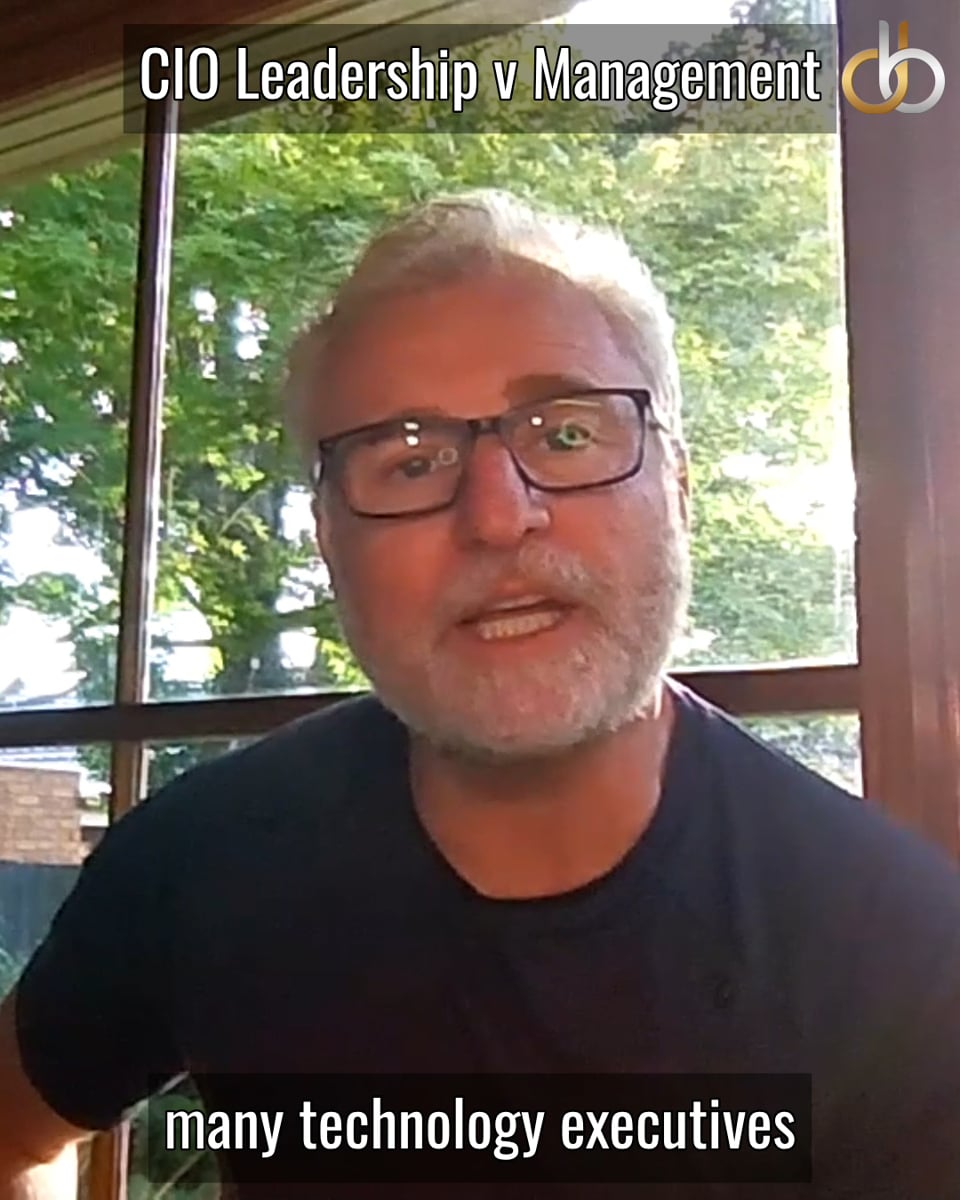
From Technology Manager to True Leader
The difference between a technology manager and a technology leader is subtle, but profound. One seeks to control conversations. The other coordinates them. One imposes opinion early. The other creates space before forming a judgement. In an era where CIO influence is directly tied to enterprise impact, this distinction matters more than ever. How do you evolve from technology manager to true leader? Diversity Of Thought Creates Stronger Outcomes Technology managers often att
Mar 192 min read
bottom of page